In collaboration with Collezione Dionisio Gavagnin
June, 2026
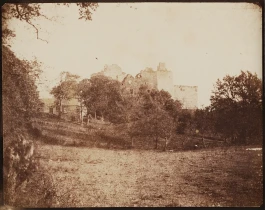
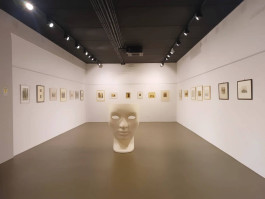
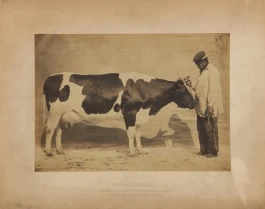
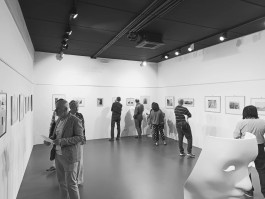
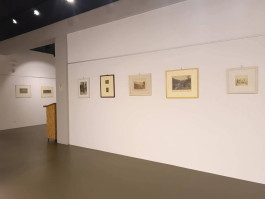
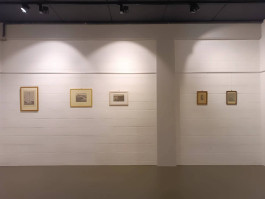
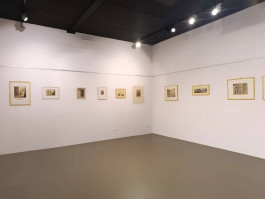
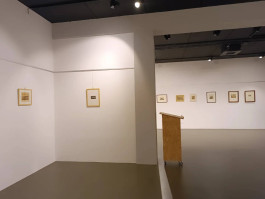
Without aiming to provide an exhaustive reconstruction of the history of the photobook, the exhibition “Pearls of Photographic Publishing from Talbot to Camera Work” presents 37 rare original photographs taken from publications that profoundly shaped modern visual culture.
The project highlights how photography revolutionized the relationship between image and knowledge. After centuries in which visual representation relied on engravings and drawings, the invention of photography in 1839 introduced a new language perceived as direct testimony of reality. Fundamental to this development was Henry Fox Talbot’s invention of the calotype, which made the multiple reproduction of images possible and gave rise to the first photographic books in history, including “The Pencil of Nature.”
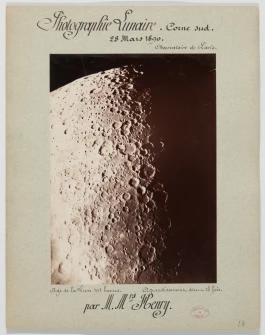
The exhibition then traces the development of photographic techniques and genres through works by major European and American pioneers: from archaeological explorations in the Middle East and the Mediterranean to documentation of the great world exhibitions, from war reportage to scientific, astronomical, and anthropological imagery. In doing so, it reveals the many roles photography assumed during the nineteenth century: artistic medium, historical document, scientific instrument, and vehicle for social information.
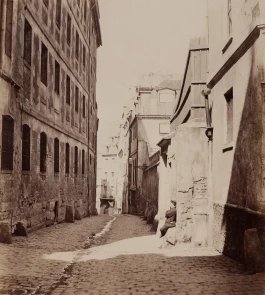
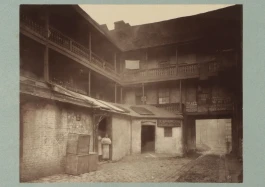
Ample space is also devoted to documentary and social photography, with images depicting urban living conditions in late nineteenth-century London and New York, as well as to Eadweard Muybridge’s studies of movement and the artistic experiments of Pictorialism and the avant-garde movements.
The exhibition concludes symbolically with a Futurist photograph by Anton Giulio Bragaglia, testifying to the transition from photography as a simple recording of reality to an autonomous language of twentieth-century artistic modernity.

In collaboration with Collezione Dionisio Gavagnin
June, 2026
Without aiming to provide an exhaustive reconstruction of the history of the photobook, the exhibition “Pearls of Photographic Publishing from Talbot to Camera Work” presents 37 rare original photographs taken from publications that profoundly shaped modern visual culture.
The project highlights how photography revolutionized the relationship between image and knowledge. After centuries in which visual representation relied on engravings and drawings, the invention of photography in 1839 introduced a new language perceived as direct testimony of reality. Fundamental to this development was Henry Fox Talbot’s invention of the calotype, which made the multiple reproduction of images possible and gave rise to the first photographic books in history, including “The Pencil of Nature.”
The exhibition then traces the development of photographic techniques and genres through works by major European and American pioneers: from archaeological explorations in the Middle East and the Mediterranean to documentation of the great world exhibitions, from war reportage to scientific, astronomical, and anthropological imagery. In doing so, it reveals the many roles photography assumed during the nineteenth century: artistic medium, historical document, scientific instrument, and vehicle for social information.
Ample space is also devoted to documentary and social photography, with images depicting urban living conditions in late nineteenth-century London and New York, as well as to Eadweard Muybridge’s studies of movement and the artistic experiments of Pictorialism and the avant-garde movements.
The exhibition concludes symbolically with a Futurist photograph by Anton Giulio Bragaglia, testifying to the transition from photography as a simple recording of reality to an autonomous language of twentieth-century artistic modernity.


Steve Bisson is an educator, curator, and writer.
He is the Chair of Photography at the Paris College of Art and co-founder of the international program Blurring the Lines, which fosters intra-academic dialogue and recognizes outstanding graduate work in photography and the visual arts. He is also the founder of the Urbanautica Institute, an online visual anthropology journal that has become a key reference for scholars and photography enthusiasts.
Bisson serves as Editor-in-Chief of the publishing house Penisola Edizioni and as Art Director of Lab27, a cultural center that advocates for issues at the intersection of image-making, photography, and society.
Over the past two decades, Steve Bisson has curated more than a hundred events—including exhibitions and festivals—and authored numerous essays and publications. He has collaborated with cultural and educational institutions worldwide and continuously questions the role of images in society.
• Coaching and Portfolio Review
Go to Coaching and Portfolio Review page
Steve Bisson has been delivering lectures, mentoring, and collaborating extensively with leading cultural and educational institutions around the world for the past 15 years and leaning to the understanding of the cultural and social dynamics associated with photography. In 2016, in collaboration with Klaus Fruchtnis, he co-founded Blurring the Lines, an academic network that fosters talent and dialogue in the visual realm.
—
Design by Roberto Vito D'Amico
Photo by Ali Ghorbani Moghaddam

Steve Bisson is an educator, curator, and writer.
He is the Chair of Photography at the Paris College of Art and co-founder of the international program Blurring the Lines, which fosters intra-academic dialogue and recognizes outstanding graduate work in photography and the visual arts. He is also the founder of the Urbanautica Institute, an online visual anthropology journal that has become a key reference for scholars and photography enthusiasts.
Bisson serves as Editor-in-Chief of the publishing house Penisola Edizioni and as Art Director of Lab27, a cultural center that advocates for issues at the intersection of image-making, photography, and society.
Over the past two decades, Steve Bisson has curated more than a hundred events—including exhibitions and festivals—and authored numerous essays and publications. He has collaborated with cultural and educational institutions worldwide and continuously questions the role of images in society.
• Coaching and Portfolio Review
Go to Coaching and Portfolio Review page
Steve Bisson has been delivering lectures, mentoring, and collaborating extensively with leading cultural and educational institutions around the world for the past 15 years and leaning to the understanding of the cultural and social dynamics associated with photography. In 2016, in collaboration with Klaus Fruchtnis, he co-founded Blurring the Lines, an academic network that fosters talent and dialogue in the visual realm.
—
Design by Roberto Vito D'Amico
Photo by Ali Ghorbani Moghaddam